HUD's 2026 emotional support animal guidance: what changed, what didn't
On May 22, 2026, HUD stopped treating untrained emotional support animals as presumptively protected in housing complaints. It now applies the ADA's "individually trained" standard when deciding whether to pursue a case.
That is a real and significant change — but narrower than the headlines suggest. The Fair Housing Act itself did not change. Congress did not act. No court has ruled ESAs outside housing protection. You can still request a reasonable accommodation, you can still sue if you're refused, and in many states your protection comes from state law that HUD's memo does not touch.
Last reviewed August 24, 2026 · Reviewed by Dr. Johnathan Miller, M.D. · Sources: 7 primary and legal · Reviewed every 90 days

The change in one table
Two federal actions matter. In September 2025, HUD withdrew the 2020 guidance notice that housing providers and courts had leaned on for six years. In May 2026, it replaced that vacuum with an enforcement standard borrowed from the Americans with Disabilities Act.
HUD's memo is enforcement policy, not law. It tells HUD staff which complaints to pursue. It does not amend the Fair Housing Act, and courts are not bound by it.
Five things that did not change
The Fair Housing Act still protects people with disabilities
The statute is untouched. Housing providers still have a legal duty to consider reasonable accommodation requests. What changed is which of those requests HUD will personally take up.
You can still sue, and you have two years
HUD's memo expressly preserves the private right of action. You may file in federal or state court within two years of the discrimination. A federal agency declining to prosecute your case does not mean you have no case.
Courts are not bound by HUD's position
No court has held that emotional support animals fall outside the FHA. Judges weigh the statute and the evidence in front of them. HUD's enforcement posture is one input, not a verdict.
State and local law is untouched
The memo says so explicitly. If your state's own fair-housing law covers assistance animals without a training requirement, that protection is exactly as strong today as it was in April 2026.
Documentation still matters — arguably more
Every route that remains open — a private lawsuit, a state civil-rights complaint, or simply persuading a landlord — starts with credible evidence from a licensed clinician. That is what an ESA letter is.
Four claims you'll still see online that are now wrong
Much of the ESA industry — including, until recently, this website — has not updated. If you read any of the following, the page is out of date:
“Landlords cannot say no.”
They could always say no in defined circumstances. Now HUD will not categorically back you up when they do, if your animal is untrained.
“Landlords can never charge pet rent or a pet deposit for an ESA.”
HUD no longer expects providers to waive fees for untrained animals. Some states still require it. Check yours.
“Breed and weight restrictions don't apply to ESAs.”
Under HUD's current posture, they may.
“An ESA letter guarantees your housing.”
It never did, and no honest provider should have said so. It is evidence supporting a request — not a court order.
We are naming these because we published some of them ourselves. Pages on this site previously claimed ESA letters carried airline rights and guaranteed landlord acceptance. Both were wrong. We have corrected them, and we've dated this page so you can see when we last checked.
What to do now, depending on where you stand
You already live with your ESA
Nothing automatically changes about your tenancy. An accommodation already granted is part of your arrangement. If your landlord now tries to impose pet fees or remove your animal, get it in writing, check your state law, and contact a fair-housing organization before you agree to anything.
You're about to move or apply
Find out what your state law says before you assume federal protection. In an independent-protection state your position may be nearly unchanged. In a federal-framework state, plan for a landlord who may lawfully say no — and consider discussing a psychiatric service dog with your clinician.
You've been denied
You still have options: a written reasonable accommodation request, a state or local civil-rights complaint, a fair-housing organization, or a private lawsuit within two years. HUD declining to pursue complaints of this type does not close those doors.
You're a landlord or HOA board
You have more latitude federally than you did in April 2026 — but state law, local ordinance, and your own lease may all still bind you, and the private right of action is intact. “HUD won't pursue it” is not the same as “this is lawful.”
Your state is now the most important thing about your situation
This is the practical consequence most coverage misses. When federal enforcement steps back, the variation between states stops being a footnote and becomes the whole picture. Some states protect support animals under their own laws — California and New York among them. Others relied entirely on the federal framework. A third group regulates the documentation itself.
Look up your state →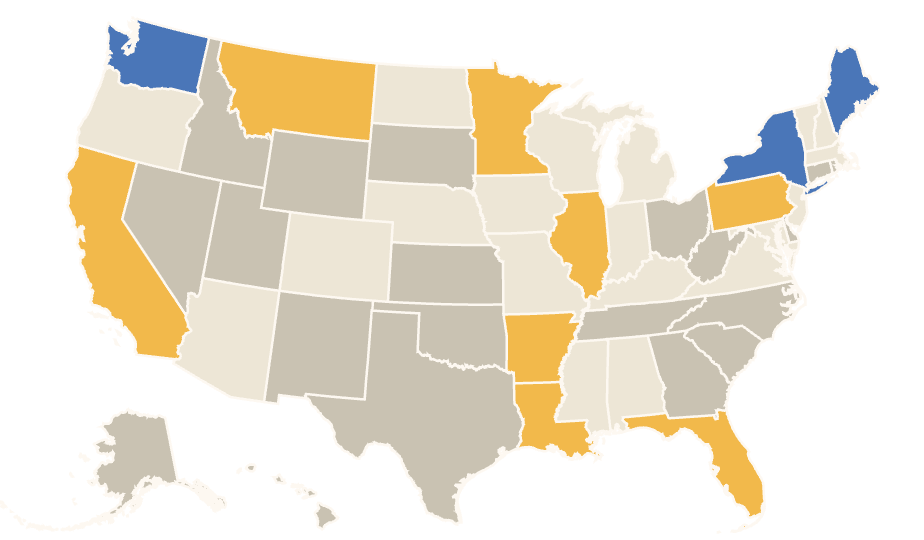
Common questions
Seven questions, current as of August 24, 2026.
Is my existing ESA letter still valid?
Your letter is a clinical document from a licensed professional. It did not expire because HUD changed its enforcement policy, and it remains the evidence you would use to support a reasonable accommodation request, a state complaint, or a lawsuit. What changed is how much weight federal enforcement will put behind it if a landlord refuses.
Did the Fair Housing Act change?
No. The statute is unchanged. Congress did not amend it and no court has ruled emotional support animals outside it. HUD changed the internal standard it uses to decide which complaints to pursue.
Can my landlord now charge pet rent for my ESA?
Federally, HUD no longer expects landlords to waive pet fees for untrained animals. Whether your landlord may actually do so depends on your state and local law and on your lease. Check your state page before you agree to pay.
Can my landlord evict my emotional support animal because of this?
Not automatically, and not because of the memo alone. An accommodation already in place is part of your tenancy. If you receive a notice, get it in writing and seek advice before responding — a fair-housing organization in your state can usually help at no cost.
Does this affect service dogs?
No. Individually trained service animals are, if anything, more clearly protected — HUD describes requests involving trained animals as presumptively reasonable. The change affects untrained animals whose role is comfort or emotional support.
Should I get a psychiatric service dog instead?
That is a clinical question, not a paperwork one. A psychiatric service dog is individually trained to perform specific tasks related to a disability, which is a substantially greater commitment of time and training than an ESA, and not everyone's situation calls for one. Discuss it with a licensed clinician.
Is HUD going to make this a formal rule?
HUD has said it intends to go through notice-and-comment rulemaking to align its regulations with the ADA. As of August 24, 2026, no proposed rule has been published. We review this page every 90 days and will update it when that changes.
Sources
Always visible on regulatory pages — never collapsed.
Find out where you actually stand
Federal enforcement narrowed. Your state law didn't. The fastest way to understand your position is to start with where you live, then talk to a licensed clinician about whether an ESA is right for your situation.
Real evaluations by licensed clinicians. No registries, no certificates, no guarantees we can't keep.